Stop saying public network walkie-talkies are no good! They've now become another powerful tool in the hands of the police.
Jan 23,2026 | yategood

Out of curiosity, we did some more research and found that one particular walkie-talkie actually appears quite frequently. It's the walkie-talkie used by personnel in the command center. Judging from the picture, this walkie-talkie is indeed small, and based on comparison, we guess it's the Yategood G370 global walkie-talkie.
Click to view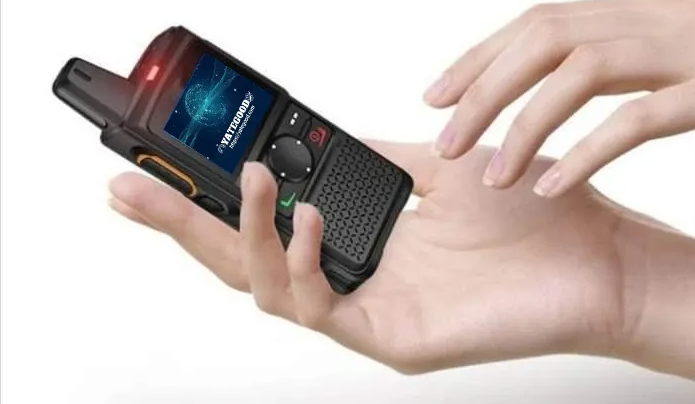
What? Why use global walkie-talkies in an arrest operation? For a long time, the public's understanding of walkie-talkies has been limited to narrowband communication and only supporting voice calls. Traditional walkie-talkies rely on radio frequency transmission, with coverage restricted by base stations (usually a few kilometers), and their functionality is limited to basic voice interaction. However, with the evolution of mobile communication technology, the emergence of public network walkie-talkies (PoC) has broken this limitation—by accessing operator networks (4G/5G/WiFi), PoC walkie-talkies achieve nationwide and even global coverage, supporting multimedia communication such as voice, video, location, and text, and possessing advanced functions such as group management and emergency calls.
For public safety departments such as public security and fire departments, communication systems must meet three core requirements: low latency (millisecond level), high reliability (99.999% availability), and strong security. While ordinary public network walkie-talkies can meet basic needs, they still have shortcomings in complex scenarios:
Network dependency risk: Public network congestion may lead to communication interruptions;
Security threats: Ordinary encryption protocols are vulnerable to cracking, and sensitive information is at risk of leakage;
To meet the critical mission call needs of industry private network users, the 3GPP, the international mobile communications standards organization responsible for 4G and 5G standards, established a working group in 2013 to define, develop, and maintain the technical specifications for MCX (Mission Critical Services) service standards, initiating MCX service standardization. MCX features open standards, high priority, and strong security, enabling it to provide a high level of service even under 4G/5G network congestion.
Currently, many mainstream domestic manufacturers have begun to launch multiple public network walkie-talkies supporting the MCX standard for industry private network users. For example, the Hytera PNC660 5G security smart terminal, recently released at the Police Expo, can provide public security personnel with critical voice, video, and data services, helping their teams to collaborate and make quick and accurate decisions.
Next, we will briefly analyze the advantages and future development possibilities of public network walkie-talkies supporting the MCX standard in critical communications such as police, emergency response, and fire fighting:
Breakthrough in 4G Ultra-Low Latency: Millisecond-Level Response for Public Network Walkie-Talkies
Traditional public network walkie-talkies are known for their high latency. Sometimes, a caller's command takes 5-10 seconds for the recipient to receive the audio, failing to meet the demands of critical command and dispatch scenarios.
With the advent of 4G networks, public network operators have achieved ultra-low latency, drastically reducing user plane latency from 20-30ms to the 1ms level, perfectly solving the latency problem of public network walkie-talkies. Statistics show that mainstream public network walkie-talkie solutions can control voice latency between 100-300ms on 5G networks, approaching the performance of dedicated digital trunking systems like TETRA and PDT. In public safety scenarios (such as arrests), latency is no longer an obstacle for public network walkie-talkies.
Intelligent Resource Scheduling: Overcoming Communication Bottlenecks in High-Density Scenarios
In large-scale sporting events and mass incidents, large numbers of people gather in confined areas, leading to insufficient base station air interface resources and an inability to meet the wireless access needs of massive numbers of users. Traditional public network walkie-talkies suffer from login and call initiation problems. Technically, this is a solvable problem:
Solution 1: QoS Hierarchical Scheduling Mechanism
Services are prioritized using 4G QoS Identifiers (4QI) or LTE QoS Category Identifiers (QCI). For example, the QCI for public network walkie-talkie services used for public safety can be set to 1 to ensure minimum latency (100ms).
Base stations support the fixed allocation of dedicated RB resource blocks for specific services to ensure bandwidth stability. Guaranteed Bit Rate (GBR) resource reservations are used for critical services (such as public network walkie-talkie services used in emergency communication scenarios).
A simple example: Just like traffic police designating emergency lanes for ambulances and fire trucks, prohibiting other vehicles from entering. Public network walkie-talkies are marked as "highest priority" (QCI=1), much like ambulances. Base stations prioritize allocating channels to them, even if ordinary users can't access TikTok.
Solution 2: 4G Network Slicing
Separate slices are created for scenarios such as public safety public network walkie-talkies, isolating them from interference from public users. Air interface resource exclusivity can reach 95%. Simply put: the operator builds an independent elevated bridge for the public safety team, completely isolated from ordinary roads. This "elevated bridge" only carries police public network walkie-talkie signals; 95% of the resources are dedicated to command and dispatch, and even large crowds cannot access it.
If public network intercom based on the 3GPP MCX standard becomes widespread in the future, operators can fully meet the critical communication requirements for public safety by prioritizing MCX services and channel resource usage. This is also one of the key communication solutions currently being promoted by European and American countries.
Full-Area Coverage Enables Global Intercom Breaks Geographical Limitations
Global intercom, leveraging operator networks, achieves nationwide wide-area coverage and communication—a capability unattainable by traditional walkie-talkies and trunked radios. In scenarios like those depicted in the program, fugitives may appear in any location, such as remote suburbs, mountains, or lakes. These scenarios cannot meet actual command requirements relying solely on dedicated network communication. Thanks to the wide-area coverage capabilities of operator networks, global intercom is increasingly used in cross-domain command scenarios, becoming a valuable supplement to dedicated communications.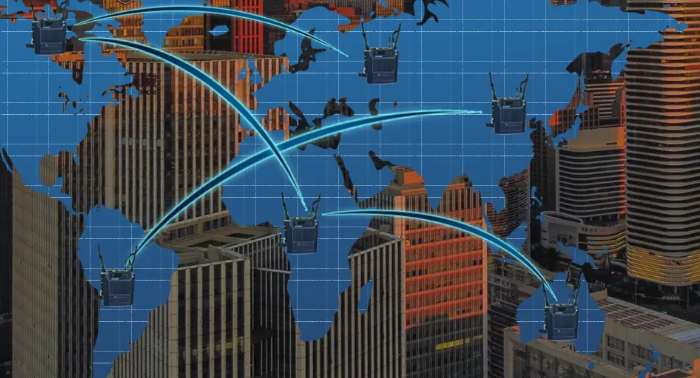
4G High Bandwidth Enables Integrated Voice and Video Terminals
In traditional public safety command and dispatch scenarios, voice and video services typically require two sets of terminals (walkie-talkie + image transmission terminal). However, based on the high bandwidth of 4G networks, a single public network walkie-talkie terminal can achieve high-definition video and critical voice capabilities, significantly reducing the equipment burden on frontline personnel.
Standardization Accelerates: Public-Private Integration Creates a Seamless Command Network
Public network intercom systems suffer from multiple standards, making interoperability difficult between products from different manufacturers. Currently, China is promoting standards and specifications for the interoperability of public network intercoms with PDT digital trunking systems. In the future, it is expected that public network intercoms used in public security, emergency response, and fire protection systems will be able to interconnect with PDT-based digital trunking communication systems, effectively promoting public-private integration solutions. Public network intercoms will become one of the important communication safeguards in the public safety field.
In conclusion, public network walkie-talkies are by no means weak. With their unique advantages, they will continue to occupy a crucial position in the future communications landscape, becoming an indispensable and important means of communication. What do you think?
https://yategood.com/products/goodwalkietalkies-1
komentuoti