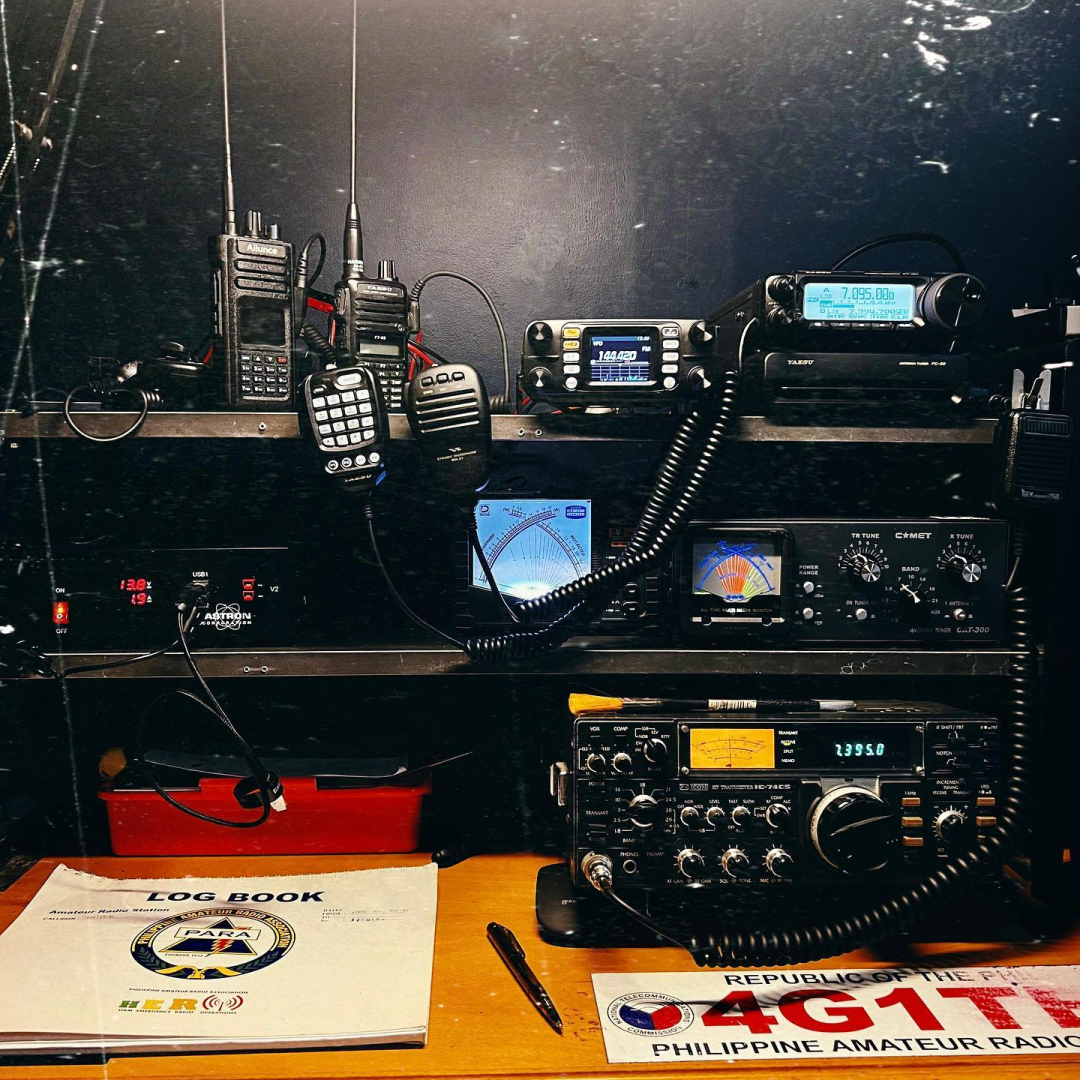
Why do we need walkie-talkies when mobile phones are so good?
Mar 07,2024 | jianpai radio
It’s 4202 years old, and mobile phones are so easy to use, why are people still using walkie-talkies?
That's because walkie-talkies don't rely on the Internet, don't incur phone charges, and can be connected as soon as a call is made. Therefore, there is always a place for walkie-talkies in the world of communication equipment.
Today, let’s learn about “walkie-talkie”~
1. What is a walkie-talkie?
Communication signals are invisible radio waves that are continuously sent and received in the air. Old-fashioned radios are devices that can only receive radio waves. A walkie-talkie (two way radio) is a device that can both receive and send radio waves. A walkie-talkie that is powerful, large and fixedly installed in a certain place (car, boat) is called a radio station. Walkie-talkies that have low power, small size and can be held in the hand and moved around are called handheld walkie-talkies, which are also the most common walkie-talkies we see.
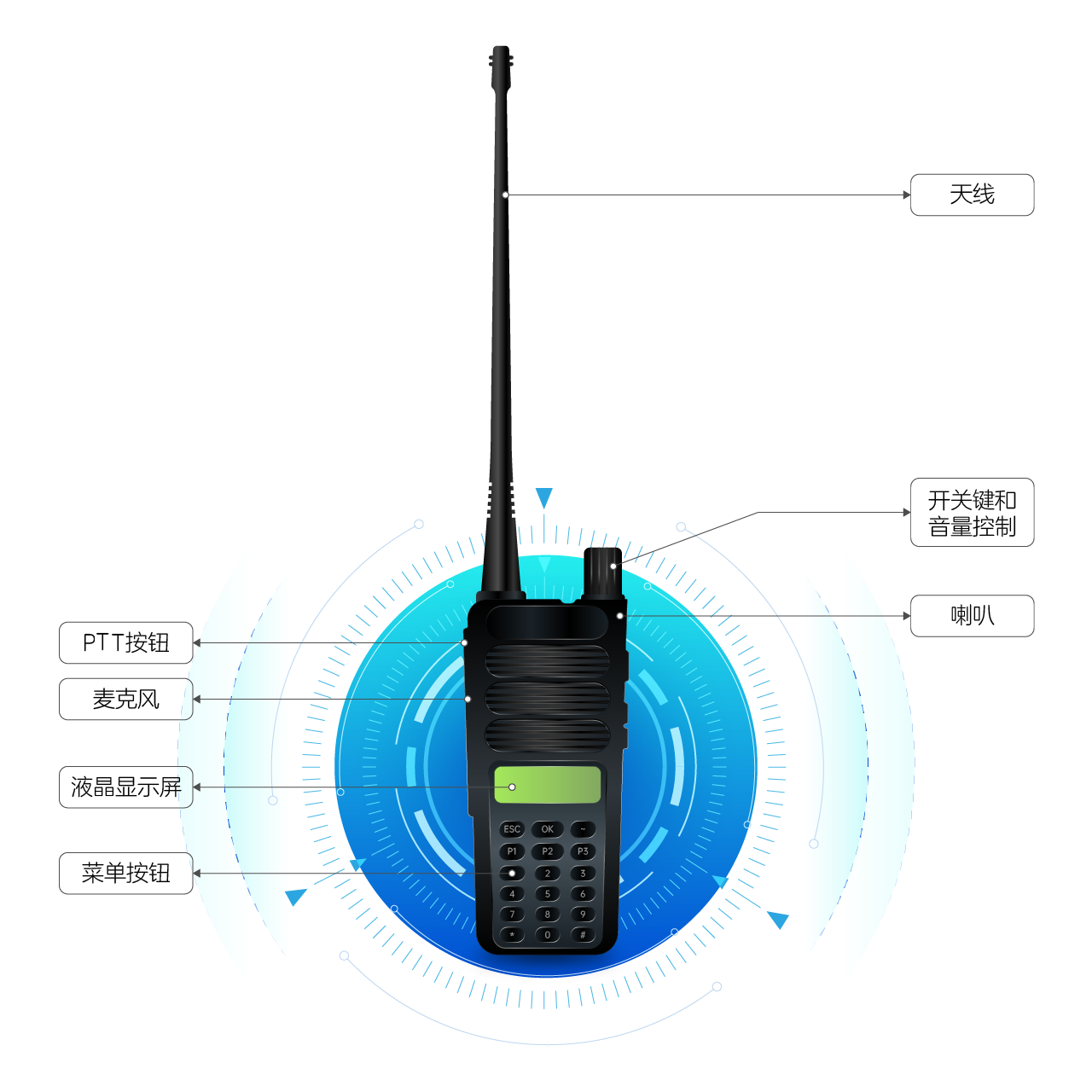
From the appearance, the walkie-talkie seems to be an old-fashioned "big brother" without a beautiful screen and looks very bulky. People can't help but wonder, it's the 21st century, what else can such "old antiques" be used for? Although the appearance is simple and the functions are simple, the working principle of the walkie-talkie is similar to that of a mobile phone.
The conversation process between a walkie-talkie and a mobile phone is similar: receive input (can be voice or text) ---> process information (encode the input into a signal) ---> send a signal (send to another walkie-talkie or send through the operator's network to the application server).
The process of speaking on a walkie-talkie (taking a common circuit as an example) is as follows:
Similar to the voice operation on social software, we need to keep pressing the PTT button (PUSH TO TALK) before we can speak. After the sound is picked up by the microphone, it is converted into an audio electrical signal.
The processor inside the walkie-talkie processes the electrical signal to generate the transmitted radio frequency carrier signal, and uses buffer amplification, excitation amplification, power amplifier, etc. to form the rated radio frequency power.
The transceiver bandpass filter suppresses the harmonic components in the electrical signal and transmits the signal through the antenna.
The process of answering calls on a walkie-talkie is similar to that of a mobile phone: receiving a signal (from another walkie-talkie or application server) ---> processing the information (decoding the signal and converting it into voice or multimedia) ---> output display.
The process of answering the walkie-talkie (taking a common circuit as an example) is as follows:
Once the walkie-talkie is turned on, it is always receiving signals.
Once the information is received from the antenna, the signal is processed:
The amplified signal from the radio frequency and the first local oscillator signal from the phase locked loop frequency synthesizer circuit are mixed at the first mixer to generate a first intermediate frequency signal.
The process of answering the walkie-talkie (taking a common circuit as an example) is as follows:
Once the walkie-talkie is turned on, it is always receiving signals.
2.Once the information is received from the antenna, the signal is processed:
The amplified signal from the radio frequency and the first local oscillator signal from the phase locked loop frequency synthesizer circuit are mixed at the first mixer to generate a first intermediate frequency signal.
The first intermediate frequency signal passes through a crystal filter to further eliminate clutter signals in adjacent channels, and then enters the intermediate frequency processing chip, where it is mixed again with the second local oscillator signal from the phase-locked loop frequency synthesizer circuit to generate a second intermediate frequency signal.
The process of answering the walkie-talkie (taking a common circuit as an example) is as follows:
Once the walkie-talkie is turned on, it is always receiving signals.
Once the information is received from the antenna, the signal is processed:
The amplified signal from the radio frequency and the first local oscillator signal from the phase locked loop frequency synthesizer circuit are mixed at the first mixer to generate a first intermediate frequency signal.
The first intermediate frequency signal passes through a crystal filter to further eliminate clutter signals in adjacent channels, and then enters the intermediate frequency processing chip, where it is mixed again with the second local oscillator signal from the phase-locked loop frequency synthesizer circuit to generate a second intermediate frequency signal.
komentēt