
Why don't walkie-talkies like to have a lot of hardware configurations?
Jan 27,2026 | yategood
In the consumer electronics sector, hardware iterations for smartphones and tablets have become commonplace, with each generation vying to cram in faster processors, larger memory capacities, and more advanced display technologies to meet users' demands for multifunctionality and entertainment. However, walkie-talkies, as wireless communication devices, have consistently maintained a perplexingly conservative stance. Their hardware configurations have rarely seen revolutionary upgrades; processor performance, storage space, and screen resolution often remain at basic levels. This phenomenon is not due to technological lag, but rather stems from a deep understanding of the essential functions of walkie-talkies and the unique constraints of the industry ecosystem. As seasoned technology observers, we can analyze the underlying logic of this "non-cramming" approach from multiple dimensions, including technology, market, and regulations, to reveal its unique position in the modern communications landscape.
Dual-mode walkie-talkies can be used easily even without a network.
The core of walkie-talkies lies in reliable, real-time communication, not computationally intensive tasks. The design philosophy of these devices emphasizes a simple and efficient circuit architecture, typically integrating only basic radio frequency modules and analog or digital signal processing units, rather than complex operating systems or high-performance chipsets. This simplicity is not a compromise, but rather a way to ensure stable signal transmission in extreme environments. For example, early walkie-talkies relied on circuit boards with fixed frequency bandwidths, allowing any compatible device to monitor the traffic while avoiding potential failures caused by unnecessary software layers. Unlike smartphones, walkie-talkies do not handle complex computations such as graphics rendering, application multitasking, or data encryption; their primary task is to achieve clear voice transmission and reception. Therefore, manufacturers tend to optimize battery life and signal strength rather than pursuing higher clock frequencies or multi-core processors. This function-oriented design ensures that walkie-talkies can operate for extended periods without hardware overload in construction sites, emergency rescue, or military operations.
The regulatory framework further reinforces the conservative tendencies in walkie-talkie hardware. Strict limits are placed on the power output, frequency allocation, and radiation standards of walkie-talkies. Consumer-grade walkie-talkies are typically limited to low power output of 0.5 to 2 watts to prevent interference with other frequency bands or health hazards. This means that even if technology allows, manufacturers cannot arbitrarily increase antenna power or integrate high-gain amplifiers to avoid violating compliance requirements. In contrast, while professional-grade two-way radios can extend their range via repeaters, their hardware is still constrained by military standards (MIL-STD-810), emphasizing shock resistance, vibration resistance, and water resistance, rather than inflated hardware specifications. This regulatory orientation not only curbs the impulse to "pile on" components but also ensures that walkie-talkies maintain compatibility and security in environments with limited spectrum resources, avoiding signal attenuation problems similar to those caused by frequency band congestion in smartphones.
User needs and market positioning are also key drivers of this hardware conservatism. The target audience for walkie-talkies is largely professionals, such as construction workers, firefighters, or outdoor adventurers, who prioritize durability and ease of use over flashy specifications. While consumer-grade walkie-talkies are lightweight, their plastic casings and basic audio quality are sufficient for casual use. Professional models, on the other hand, use robust materials and are designed to withstand extreme temperatures and mechanical stresses, without requiring built-in high-resolution screens or numerous sensors. In manufacturing or public safety sectors, walkie-talkies need to support several hours of continuous use, necessitating battery capacity over processor efficiency. Historical experience shows that excessive hardware upgrades can lead to increased size or cost, which are often burdens rather than benefits for frontline users. Compared to the consumer electronics attributes of smartphones, walkie-talkies are more like precision tools, and market competition focuses on reliability and cost-effectiveness, rather than an annual specifications race.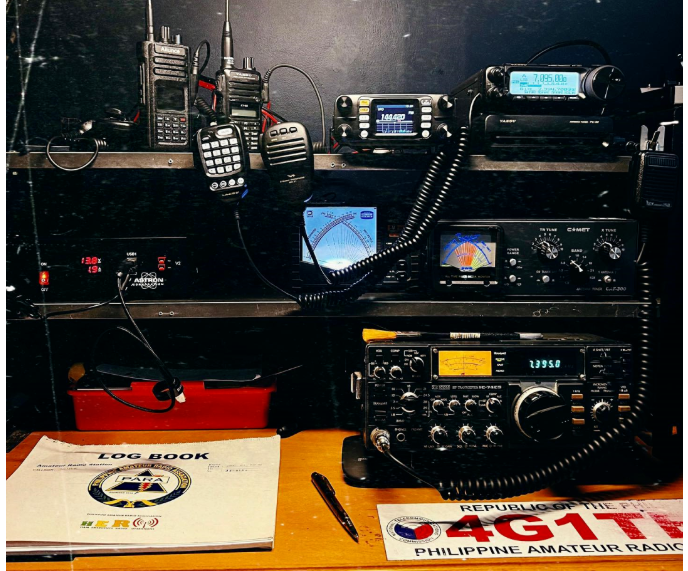
Historically, this conservatism is rooted in the military origins of walkie-talkies. Early models developed during World War II, such as the C-58 Pack Set by Canadian engineer Donald Hingers, emphasized privacy coding and noise filtering while maintaining a relatively simple hardware framework to withstand the harsh conditions of the battlefield. In the decades that followed, while the size of walkie-talkies remained largely unchanged due to battery and speaker requirements, their internal circuitry gradually became digitized, but they did not evolve into the multi-functionality of smartphones. Manufacturers like Motorola established product lines centered on durability early on, avoiding compatibility challenges arising from hardware expansion. This path dependence ensured that walkie-talkies retained their core simplicity during digital transformation; even the integration of LTE or Wi-Fi modules was merely for extending range rather than reshaping the hardware ecosystem.
Looking to the future, while walkie-talkies may merge with smart devices, such as by integrating GPS or noise cancellation algorithms, their hardware configurations will likely adhere to conservative principles. Emerging technologies, such as smart radio systems, are breaking through traditional range limitations through hybrid connectivity (such as LTE and Wi-Fi) without requiring significant upgrades to processors or memory. This reflects the industry's consensus on sustainability and practicality: in a world of limited resources, excessive hardware stacking often backfires. Ultimately, the "no hardware stacking" approach in walkie-talkies is not outdated, but rather a wise restraint. It reminds us that the true essence of technological progress lies in serving core needs, rather than blindly pursuing the pinnacle of specifications.
cometariu