In an era of ubiquitous mobile phone connectivity, why are walkie-talkies selling better and better? The answer lies in economic development!
Jul 07,2026 | yategood
In an era of ubiquitous mobile phone connectivity, why are walkie-talkies selling better and better? The answer lies in economic development!
Have you noticed a rather contradictory phenomenon?
More than a decade ago, countless people predicted that once smartphones became widespread and network communication became ubiquitous, walkie-talkies would eventually be completely phased out.
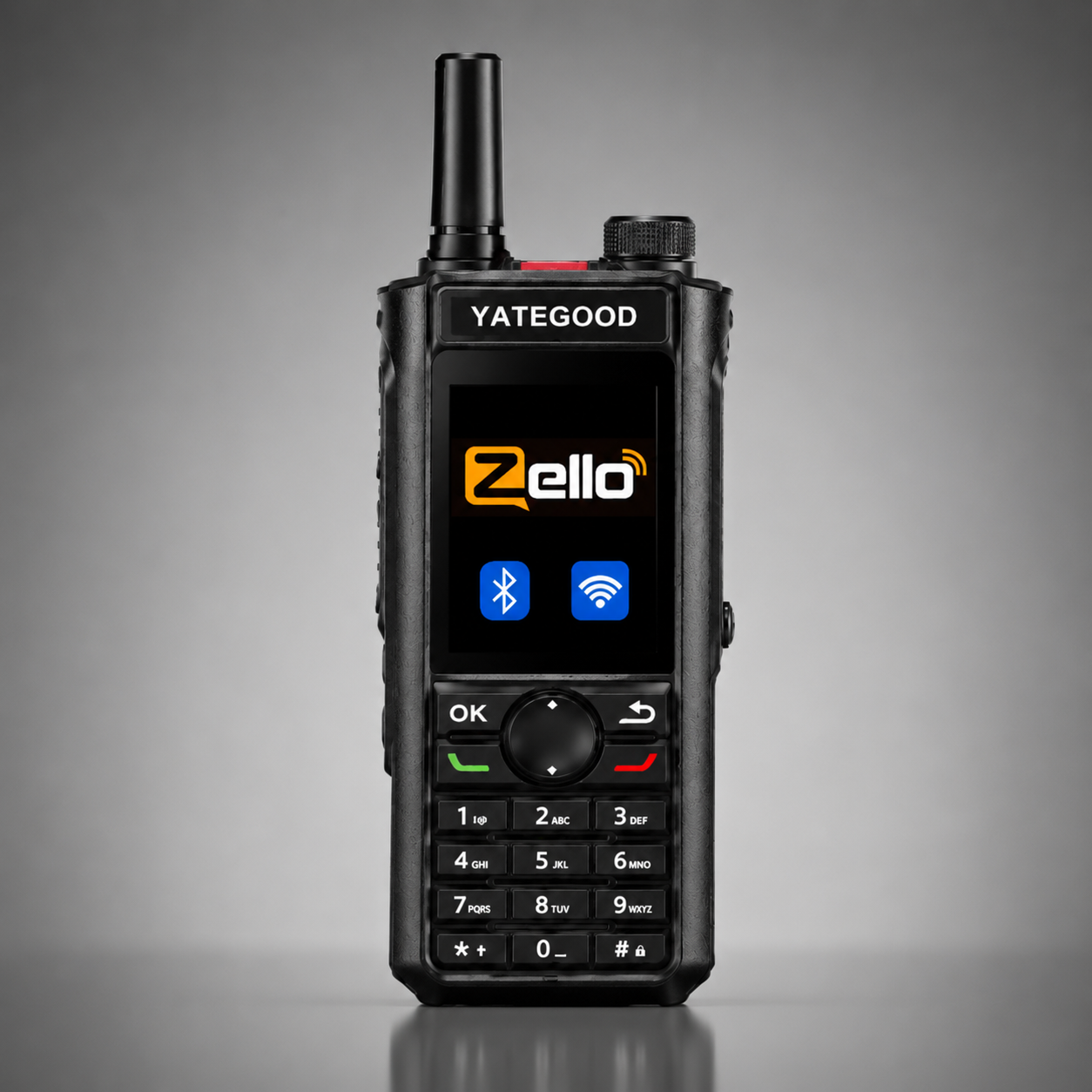
In most people's minds, walkie-talkies have obvious drawbacks: no internet access, limited functionality, and only suitable for short-range communication, far less comprehensive than smartphones.
However, consider today's communication environment: 5G signals cover every village; WeChat, phone calls, and voice messages can be sent anytime, anywhere; even ordinary people are making fewer phone calls and voice messages, relying mostly on online text messaging for daily communication.
Logically, walkie-talkies, primarily designed for short-range communication, should gradually fade from the market and disappear.
But reality has drastically overturned this prediction: the more developed the internet and the more prosperous the economy, the greater the market demand for walkie-talkies, and the more booming the industry becomes.
Today, we'll discuss the inseparable and profound relationship between walkie-talkies and economic development, drawing on the fundamental logic of market economics and twenty years of real industry data.
Everyone has misunderstood the walkie-talkie: it was never a "communication substitute".
The common misconception that smartphones will replace walkie-talkies stems from a misunderstanding of the core positioning of these two products.
The core attribute of smartphones, which we use daily, is as social and entertainment tools. Calls and voice communication are only a small, insignificant part of their hundreds of functions. We use our phones for watching videos, working, shopping, and entertainment; communication is merely an additional need.
Walkie-talkies, from their inception, have never been designed for casual social conversations. Their core positioning is singular: a professional efficiency tool for specific scenarios.
Their usage scenarios and core needs are completely different, and there is no direct substitution between them.
To put it more bluntly: smartphones address the social need of "communicating with anyone, anytime, anywhere"; while walkie-talkies address the need for low-cost, zero-latency, barrier-free, and highly efficient collaborative work.
This explains why, despite the increasing variety of online communication methods, businesses and traditional industries are increasingly relying on walkie-talkies.
The underlying truth of the economy: In prosperous times, efficiency trumps everything.
The market size of walkie-talkies has never depended on the level of development of communication technology, but rather on the level of development of the real economy. The two are positively correlated: the better the economy, the higher the demand for work efficiency in various industries, and the more prominent the market value of walkie-talkies becomes.
We can use the simplest example, the restaurant industry, to intuitively understand the difference:
During a period of economic downturn and low customer traffic, the operating logic of small and medium-sized restaurants is very simple. Waiters only need to perform basic tasks such as greeting customers, serving food, and taking payments. With few staff and simple processes, all work can be completed through walking around, shouting, and offline communication, without the need for any auxiliary communication tools. At this time, walkie-talkies are a dispensable and redundant cost for the restaurant.
However, everything changes during periods of economic prosperity and active consumption.
Large restaurants in popular commercial areas experience double the customer traffic, and job roles become more specialized. Multiple positions, including front-of-house, kitchen, food delivery, cashier, and cleaning, need to work together in real time. Every minute of delay during peak hours directly impacts customer experience, reduces table turnover, and ultimately translates into real revenue losses.
At this stage, timeliness and collaborative efficiency are the core profit secrets for physical businesses.
The biggest advantage of walkie-talkies is that they are perfectly suited for these scenarios: they are ready to use right out of the box, offer one-button communication, allow simultaneous communication for all members, require no dialing, consume no data, are unaffected by network lag, and allow one person to speak while everyone receives the message. They are the lowest-cost and fastest-responding group collaboration tool.
This trend applies not only to the catering industry but also to property security, logistics and warehousing, construction sites, supermarkets and retail, cultural and tourism attractions, event execution… all large-scale physical industries are subject to this pattern.
The more developed the economy, the more large-scale enterprises there are; the more intense the industry competition, the more willing companies are to invest in low-cost tools to improve team efficiency. This is the core underlying logic behind the continued growth of the walkie-talkie market.
Future Trend: Walkie-Talkies Will Never Be Obsolete
Even today, many people still belittle walkie-talkies for their "limited functionality and inability to access the internet." However, it is precisely this "simplicity and purity" that makes them an irreplaceable core advantage.
Smartphones rely on the network, are prone to battery depletion, are cumbersome to operate, and are easily affected by external signals. WeChat and phone calls require dialing and waiting for connections, making real-time multi-person communication impossible and completely unsuitable for high-intensity, fast-paced work scenarios.
Walkie-talkies, on the other hand, require no base stations, no data usage, and no complex operations. They are unaffected by network outages, are low-cost, highly adaptable, and designed specifically for collaborative work.
From a long-term perspective, as long as the real economy continues to develop, large-scale teams still exist, and efficiency remains the core of corporate competition, walkie-talkies will always have irreplaceable market value.
Communication technology solves the problem of long-distance social interaction between people; walkie-talkies safeguard the operational efficiency of the real economy.
Understanding the connection between walkie-talkies and the economy is key to truly understanding the business reality behind this niche market.
Comment
.png?w=1254&h=1254)