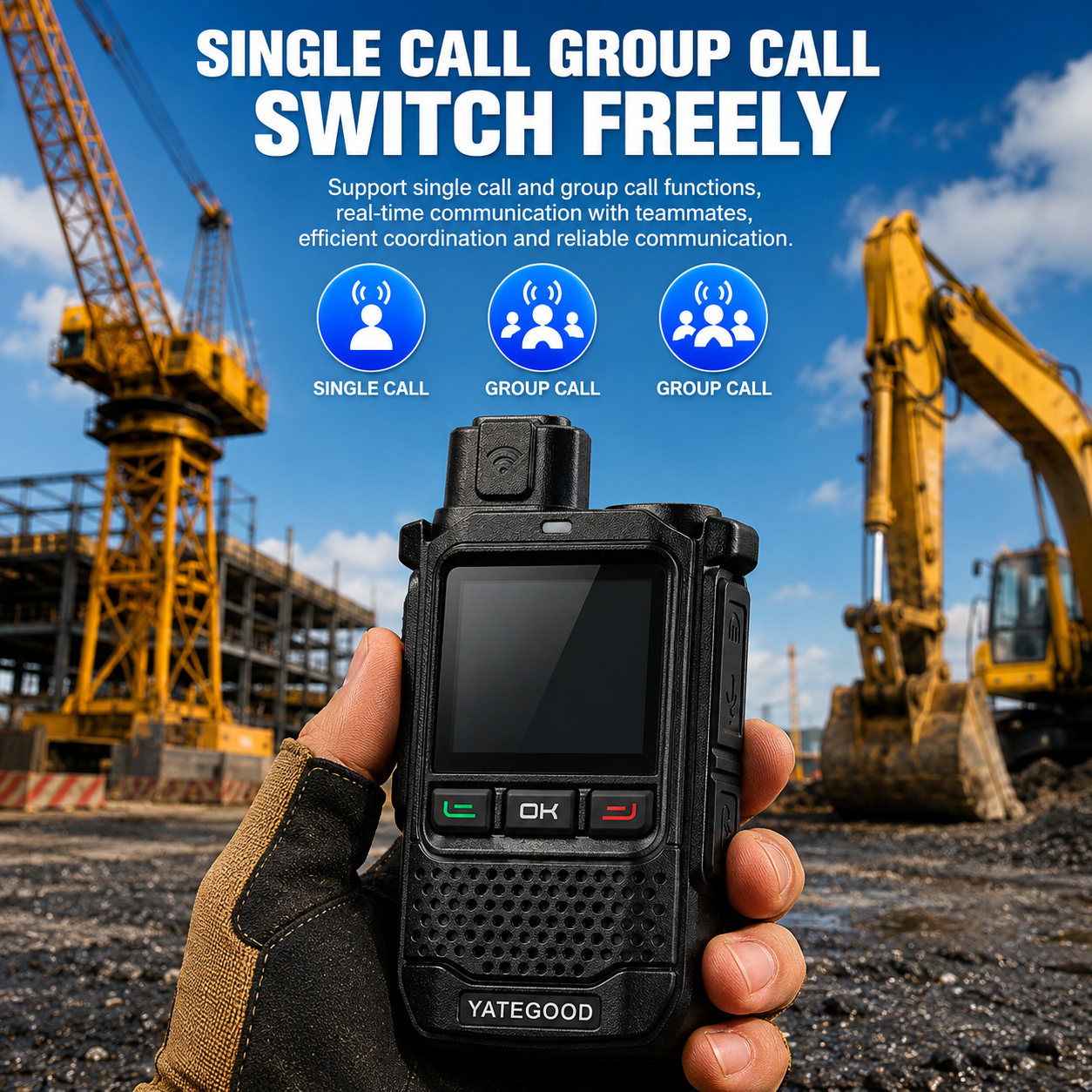
Public network walkie-talkies – breaking down distance limitations and making team collaboration more efficient.
Jul 12,2026 | yategood
Public network walkie-talkies – breaking down distance limitations and making team collaboration more efficient.
Nowadays, public network walkie-talkies are increasingly widely used in people's work and daily lives, becoming an indispensable communication tool for many industries such as logistics, security, hotels, and taxi dispatch.
So, what are the advantages of public network walkie-talkies compared to traditional analog and digital walkie-talkies? Let's find out.
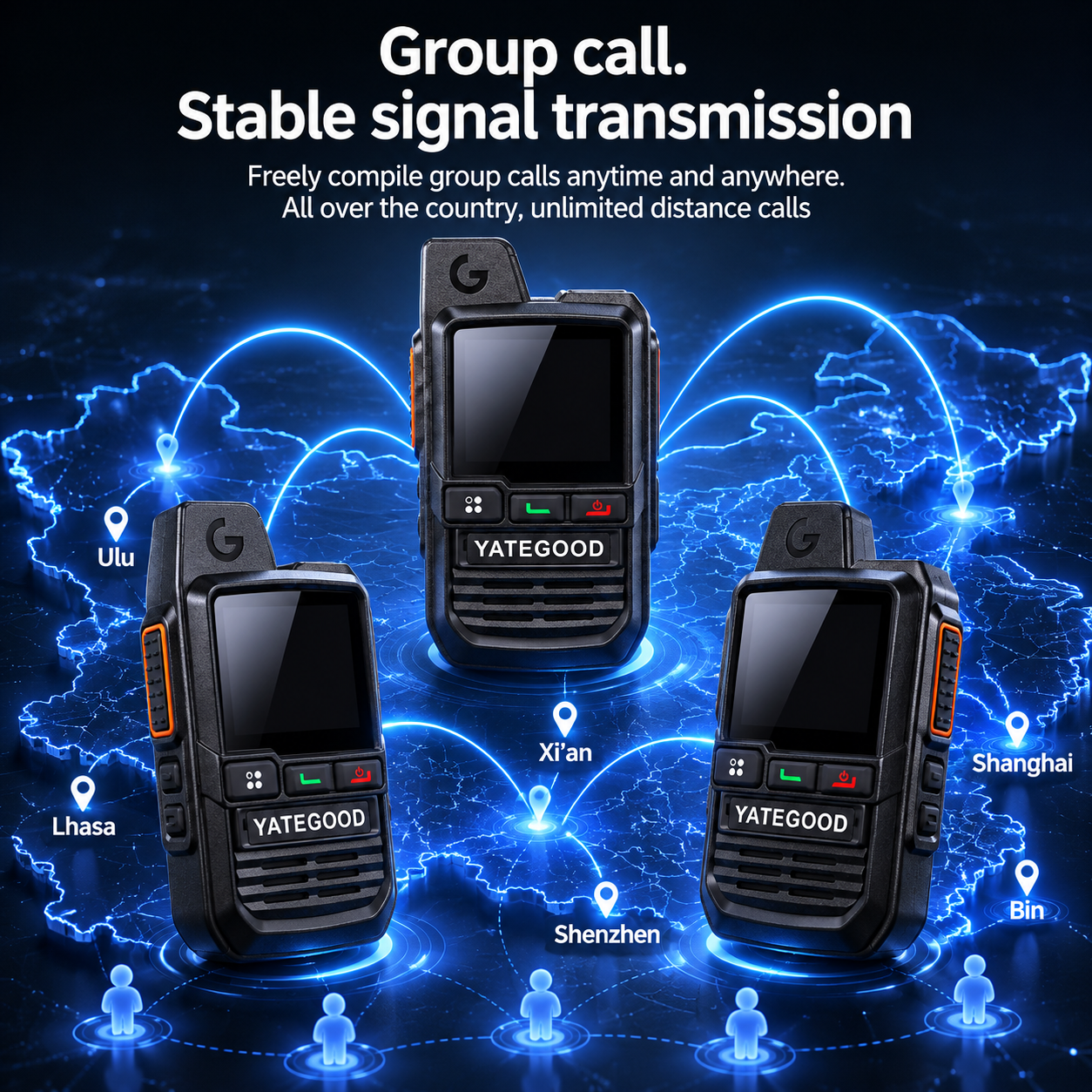
The emergence of public network walkie-talkies has broken the limitations of communication distance. Unlike traditional walkie-talkies that rely on specific frequencies for communication, it uses a widely covered operator network to make calls. This means that as long as there is an operator signal, seamless communication over long distances and across regions can be achieved.
In scenarios such as logistics scheduling, construction command, emergency rescue, park operation and maintenance, and property management, compared to the cumbersome operation of mobile phones, public network walkie-talkies, with their minimalist one-button intercom design, eliminate redundant steps such as dialing and waiting for connection, achieving instant response without waiting.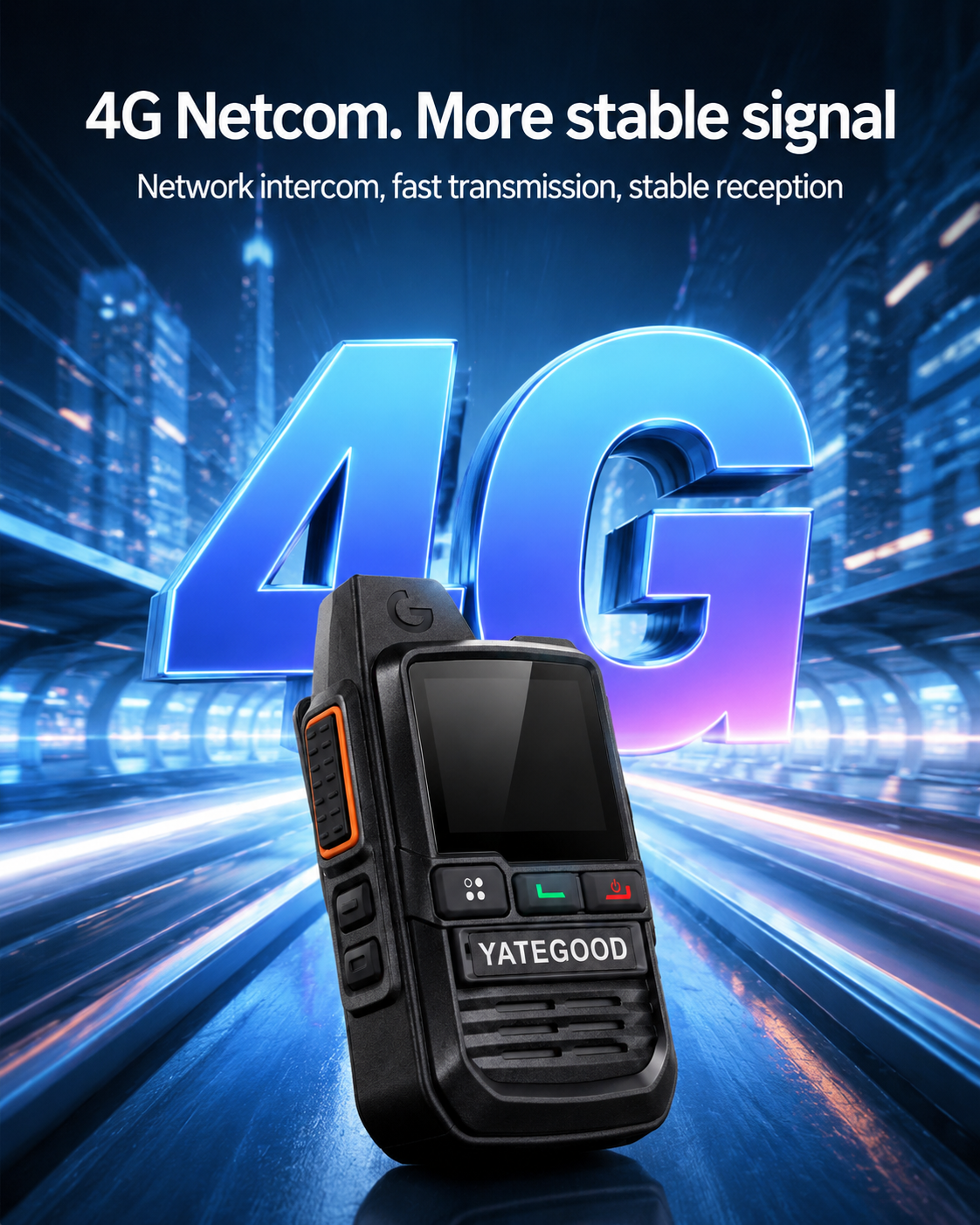
Public network walkie-talkies not only enable stable voice communication, but also support a variety of functions such as positioning, SOS alarm, and electronic fence, meeting diverse communication and management needs in different scenarios.
Tourism Industry: Tour guides can maintain real-time contact with scattered group members, coordinating team actions, ensuring unified team movements, and preventing members from getting lost.
Hotels and Supermarkets: Staff can immediately coordinate through group calls in case of emergencies, improving operational safety and service efficiency.
Self-Driving Travelers: It helps vehicle fleets share real-time road conditions, traffic congestion, or emergencies ahead, and quickly synchronize information such as route adjustments and rest stop planning, mitigating driving risks and making travel collaboration more efficient and safer.
Transportation Industry: The transportation industry operates 24/7. Due to its wide geographical coverage, traditional walkie-talkies struggle to achieve inter-vehicle communication. Public network walkie-talkies are not limited by distance, greatly facilitating communication between vehicles and between vehicles and companies.
In any operational scenario requiring unified dispatch and coordination, public network walkie-talkies can improve work efficiency and effectively reduce communication costs.
Comment
.png?w=1254&h=1254)