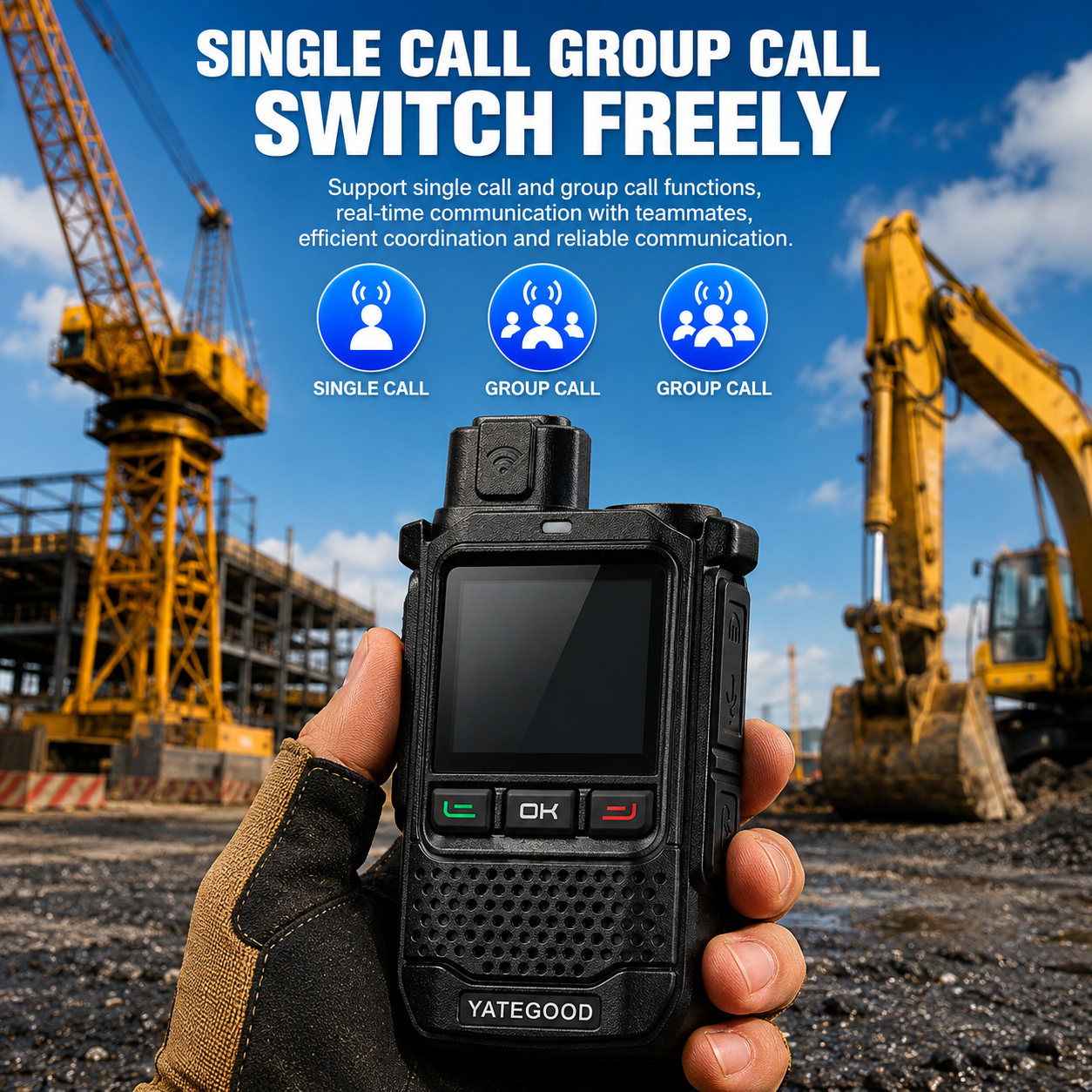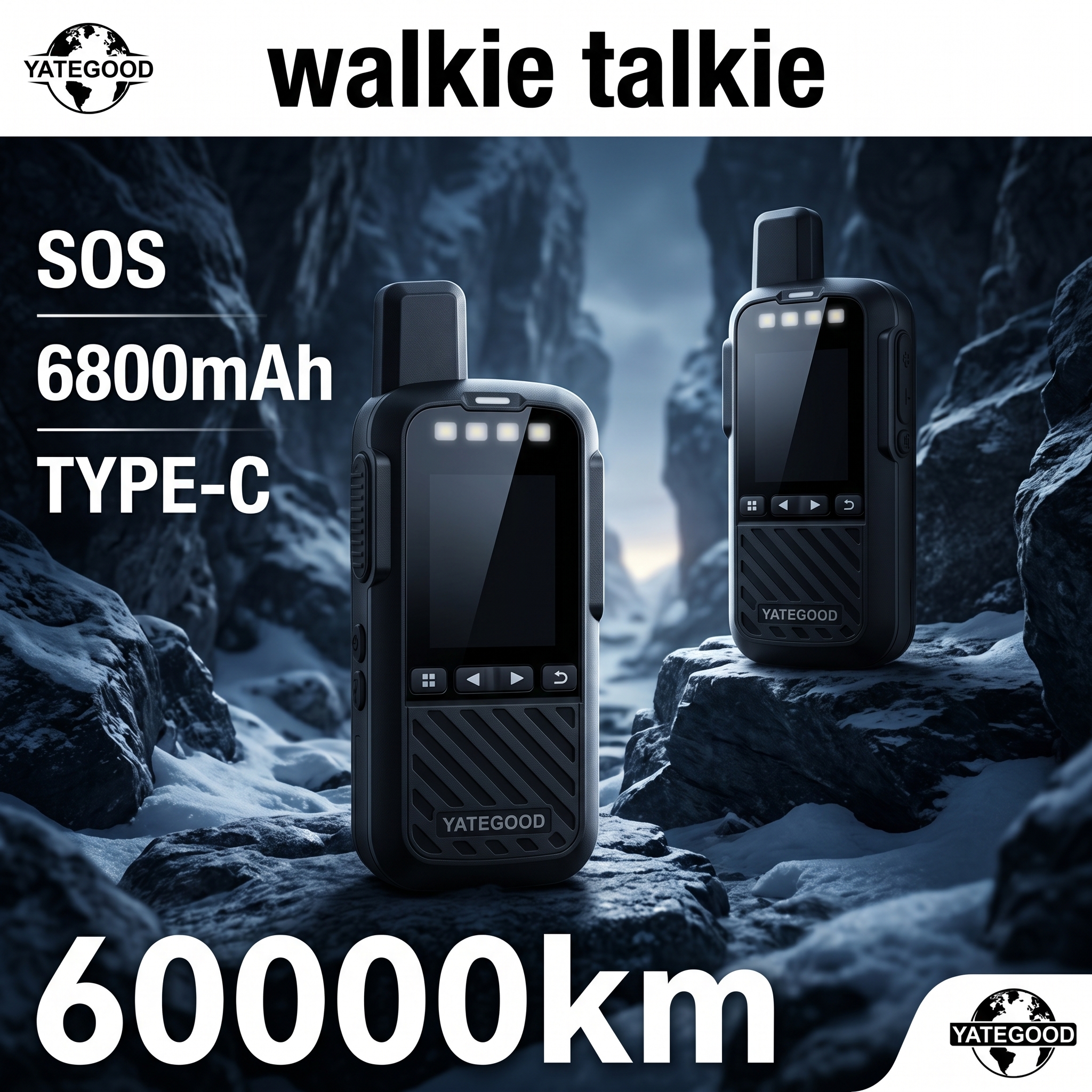
A walkie-talkie, also known as a two-way radio, is a portable device that enables two-way communication.
Jun 23,2026 | yategood
A walkie-talkie, also known as a two-way radio, is a portable device capable of two-way communication. It utilizes the propagation of radio signals through the air to achieve point-to-point or point-to-multipoint communication. Since its invention in the 1930s, walkie-talkies have become an indispensable part of daily life and are widely used in various fields.
The origin of walkie-talkies can be traced back to the 1930s. In 1936, Motorola in the United States developed the world's first mobile radio communication product, which was mainly used in the fields of ships and aviation. With the advancement of technology, walkie-talkies have gradually become smaller and easier to carry, and their application range has continued to expand.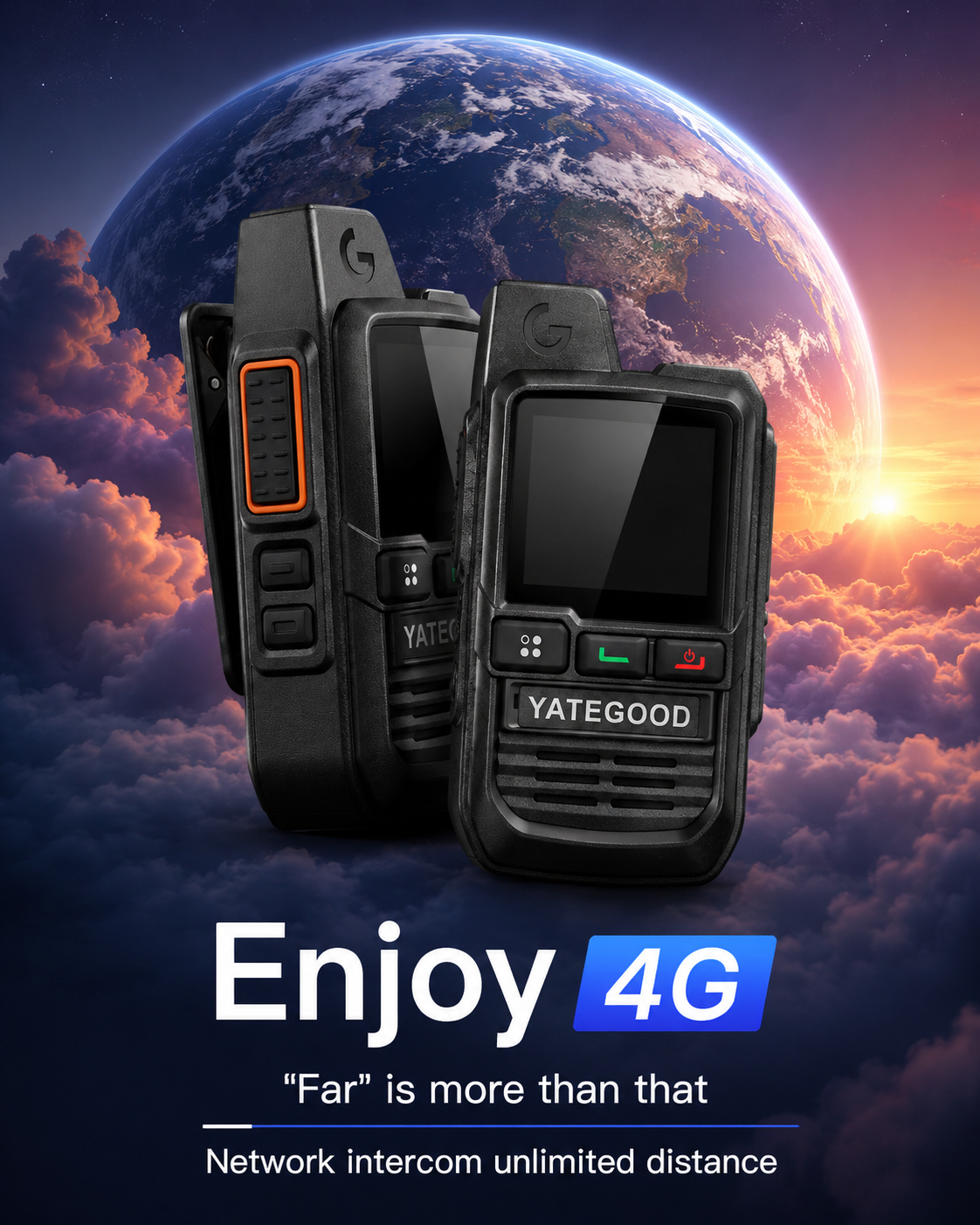
In the early 21st century, with the development of digital signal processing technology, walkie-talkies began to transform into digital ones. Digital walkie-talkies have better anti-interference capabilities, longer transmission distances, and higher voice quality, and are increasingly favored by users.
A walkie-talkie is a point-to-multipoint two-way mobile communication tool that allows many people to communicate with each other at the same time. In terms of network standards, walkie-talkies are divided into two categories: public network walkie-talkies and private network walkie-talkies.
Private network walkie-talkies are typically designed and built specifically to meet the requirements of customer organization, coordination, production safety, and dispatching. They utilize ultra-high frequency (UHF)/very high frequency (VHF) frequencies for communication. Compared to other communication methods, this method is characterized by: instant communication, one-to-many response, cost-effectiveness, low operating costs, no call charges, and ease of use. It also features group call broadcasting, system calling, and confidential calling functions. In handling emergencies or conducting dispatching and command, its role is irreplaceable by other communication tools.
Analog walkie-talkies are generally categorized into two types: analog conventional and analog trunked (MPT1327/1343). According to national development plans, analog walkie-talkies will be gradually phased out of government and industry sectors starting in 2014.
The mainstream digital walkie-talkie standards are as follows:
1. DMR
Network topology: Large-area network, overall star topology.
Advantages: Supports dual-timeslot communication, allowing two simultaneous calls on the same frequency; supports data transmission; has call processing, SMS service, remote kill/activation functions, etc.
Disadvantages: Base station networking requires a wired network; network construction requirements are high; expansion flexibility is poor; and subsequent network costs are incurred.
Applications: Small-scale applications in factories, mines, and residential areas. Examples include the Motorola P8268/8668 used in the domestic mobile communications industry a few years ago and the Hytera models used in recent years.
2. DPMR
Less common in China.
3. TETRA
Network Topology: Cellular network, overall star topology, mostly co-built with operators.
Advantages: Supports group calls, individual calls, broadcasts, and packet communication; high spectrum utilization; supports high-speed data transmission and rich value-added services.
Disadvantages: High construction cost; requires wired network support and professional technicians for maintenance.
Applications: Daily dispatching within small areas such as airports and subways.
4. PDT Digital Trunking
Network Topology: Large-area network, overall star topology.
Advantages: Supports group calls, individual calls, broadcasts, and packet communication; high spectrum utilization; supports high-speed data transmission and rich value-added services.
Disadvantages: High construction cost; requires wired network support and professional technicians for maintenance; network has some vulnerability; poor resilience and immediate repair capabilities.
Applications: Daily duty and monitoring; urban and small-scale disaster and accident support; walkie-talkie systems used in public security systems and some emergency industries fall into this category.
Comment
.png?w=1254&h=1254)