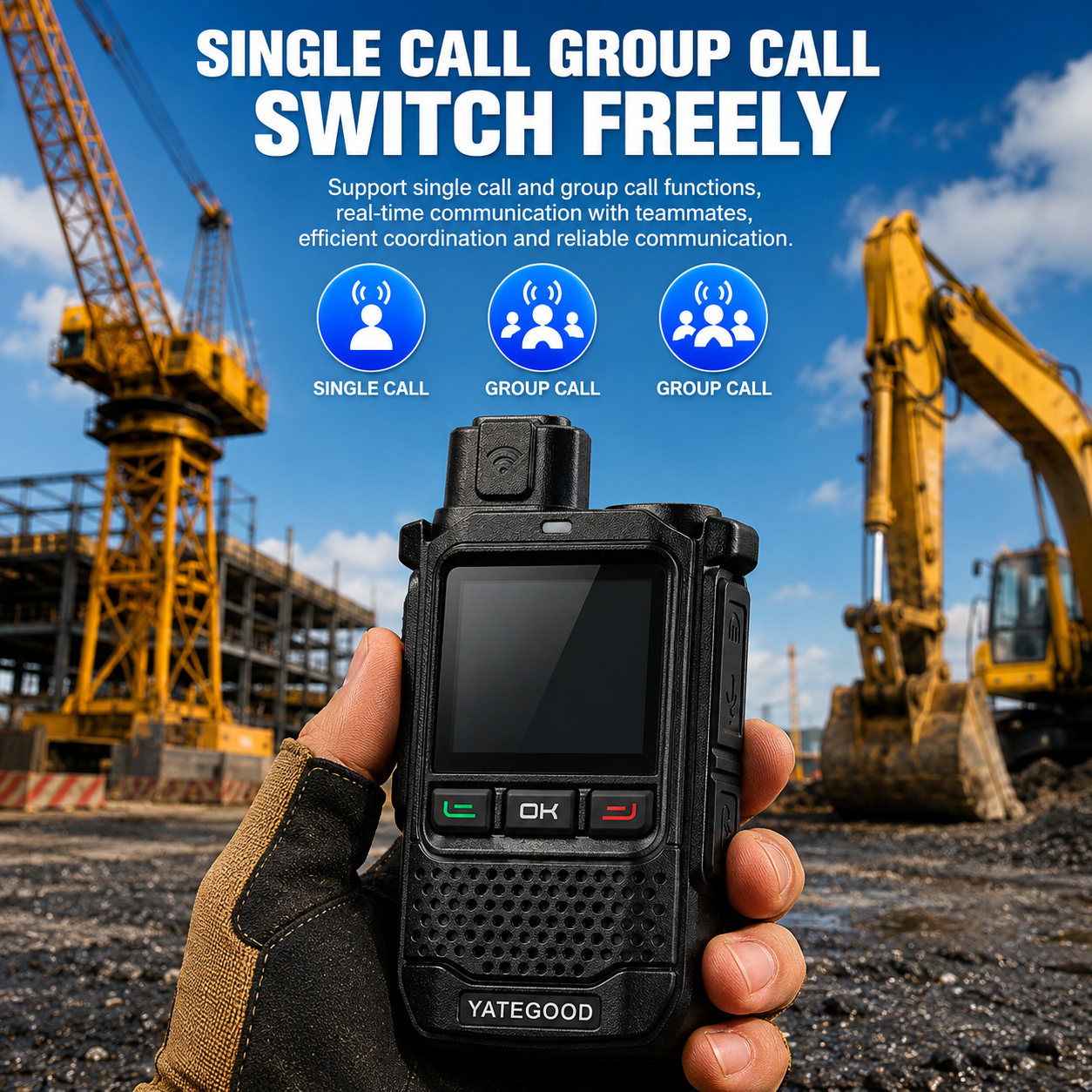
Four major advantages and common application scenarios of public network walkie-talkies
Jun 20,2026 | yategood
In recent years, with the continuous improvement of social informatization, public network walkie-talkies have emerged in the field of wireless communication. Compared with traditional analog and digital walkie-talkies, what are the advantages of public network walkie-talkies? What has made them so rapidly rise to the top of the walkie-talkie market in just a few years?
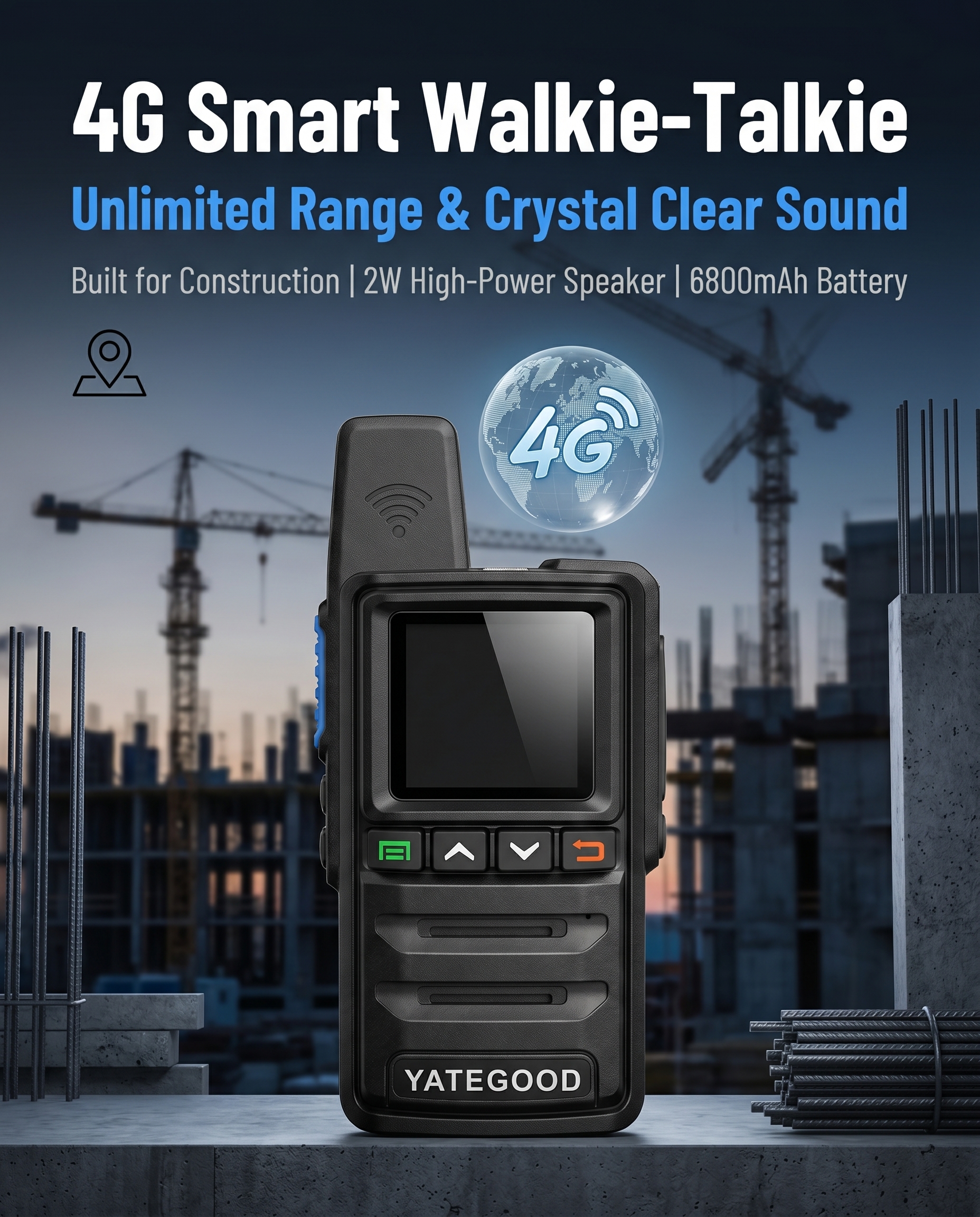
Breaking the Distance Barrier
The emergence of public network walkie-talkies has broken the limitations of communication distance. Compared to the traditional hard wireless walkie-talkie mode, public network walkie-talkies rely on the operator's network to achieve communication. This means it's somewhat similar to WeChat on a mobile phone; as long as the operator's signal covers the area, the public network walkie-talkie can achieve real-time communication. This real-time interconnectivity distinguishes public network walkie-talkies from WeChat, highlighting their special status as professional walkie-talkie equipment.
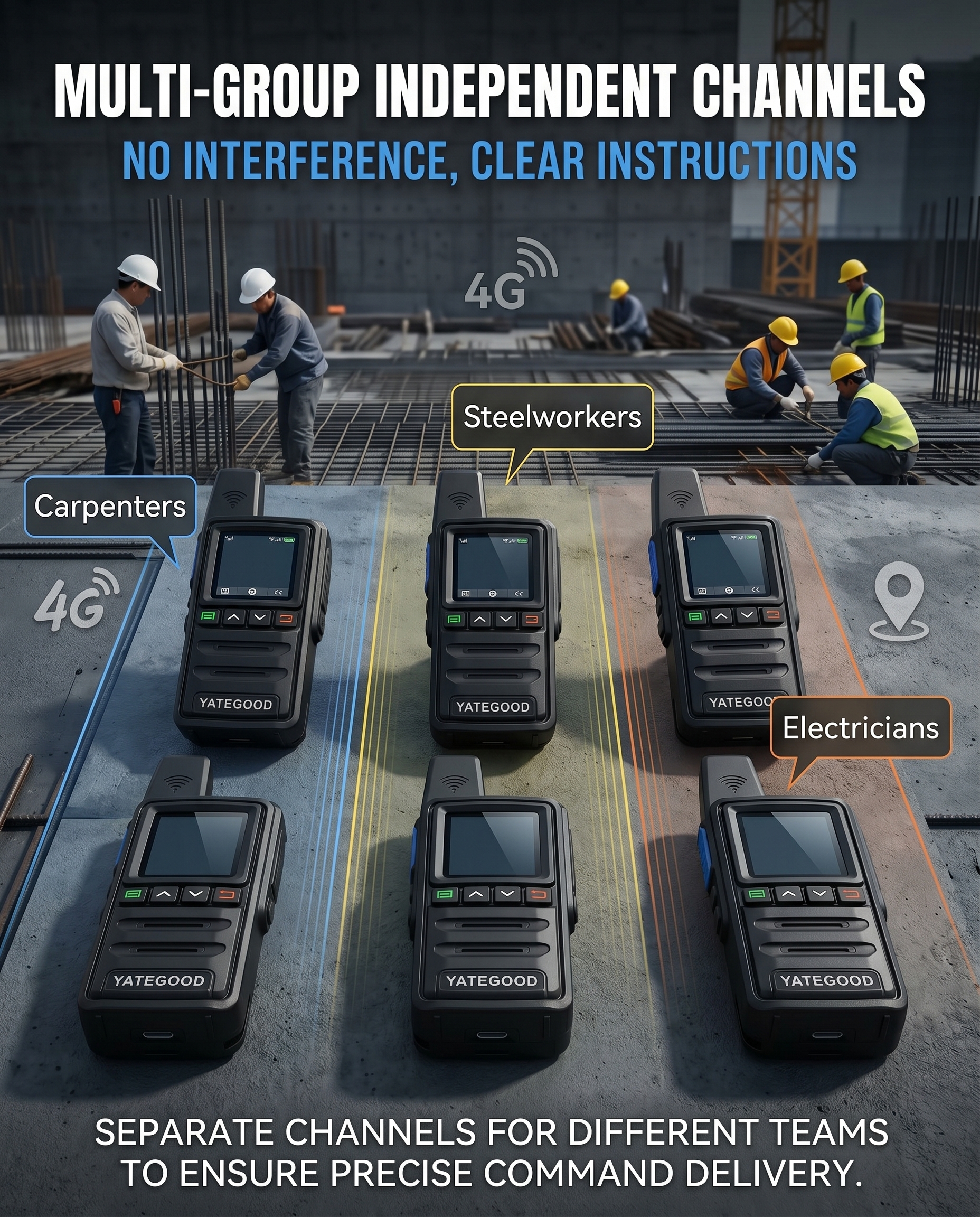
Real-time communication, instant response
In applications such as transportation dispatching, traffic control, large parks, construction sites, and shopping mall management, public network walkie-talkies offer faster response times, more stable data and voice transmission, and a longer lifespan compared to the cumbersome dialing, listening, and replying operations of WeChat and mobile phones.
Low cost, no certification required
Because public network walkie-talkies rely on public mobile networks, they significantly reduce customer setup costs. Furthermore, users do not need radio certification, making them accessible to the general public and amateur users. Compared to the high call and data charges of mobile phones, the operating cost of public network walkie-talkies is relatively low.
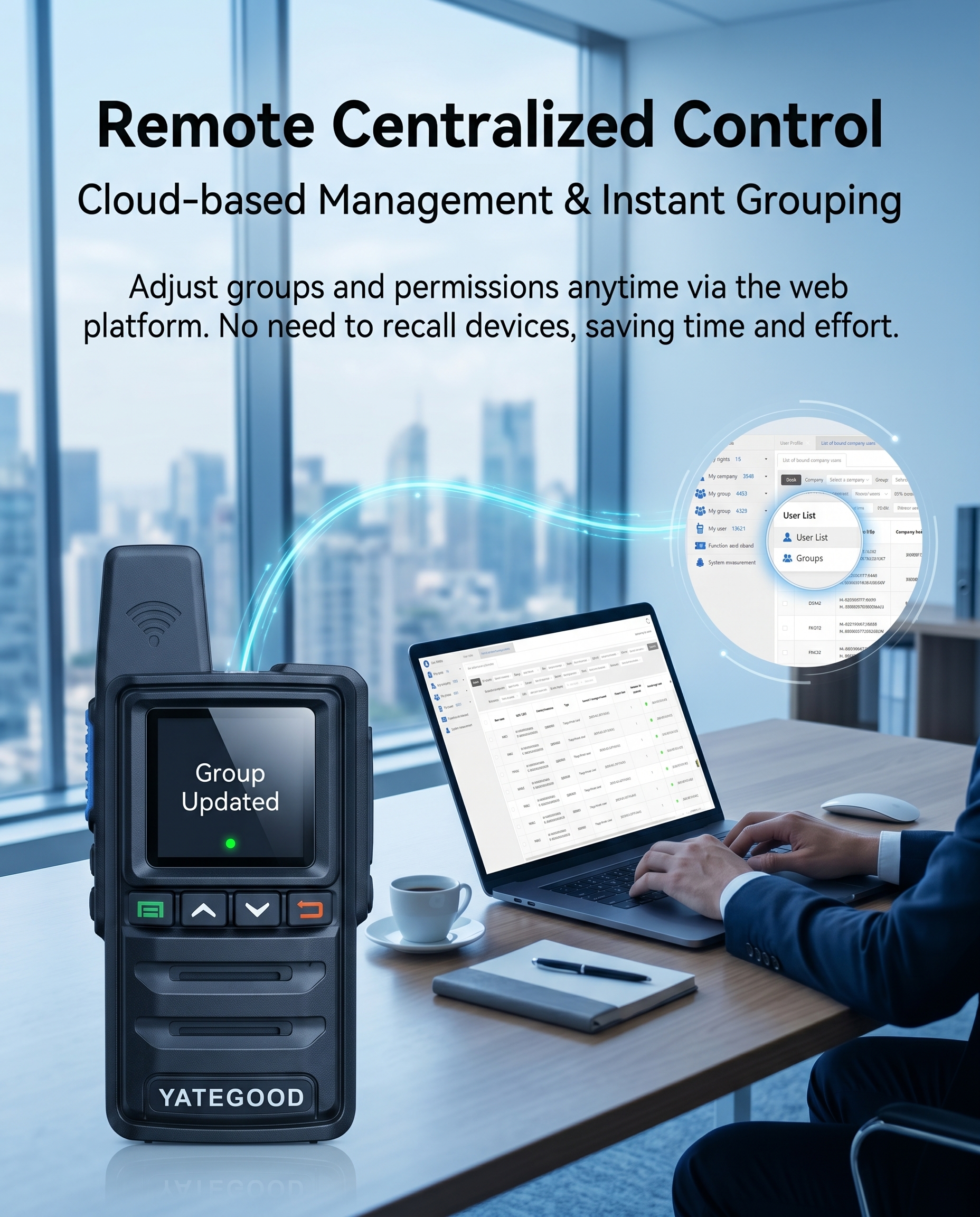
Hands-Free, Efficient Communication
While smartphones are feature-rich and WeChat can handle basic voice communication, walkie-talkies remain irreplaceable for professional users, especially during duty or work assignments. When busy with other tasks, a Bluetooth headset paired with a public network walkie-talkie allows for one-click communication, ensuring privacy, security, efficiency, and accuracy.
Which industries prefer public network walkie-talkies?
Self-driving enthusiasts: Walkie-talkies are an essential tool for outdoor enthusiasts, especially for self-driving groups. Talking while driving is safer and more reliable than making phone calls, and information is more timely. Public network coverage eliminates distance limitations.
Hotels and supermarkets: Convenient communication is fundamental to the smooth operation of hotel services and management. Hotels generally have full Wi-Fi coverage, making public network walkie-talkies the best communication tool for hotels and supermarkets anytime, anywhere.
Tourism industry: Tour guides can monitor the location of their group members in real time and maintain close communication. With one public network walkie-talkie per person, tour groups can save on the need for loudspeakers and megaphones.
Taxi transportation industry: As a 24-hour public transportation service, taxis cover a wide area. Traditional walkie-talkies are difficult to use for communication. Public network walkie-talkies, without distance limitations, provide great convenience for communication between taxis and between taxis and taxi companies.
Comment
.png?w=1254&h=1254)