Mobile phones have already entered the 5G era, so why do walkie-talkies still need to exist?
Jun 28,2026 | yategood
Mobile phones have already entered the 5G era, so why do walkie-talkies still need to exist?
With smartphones already in the 5G era, why do walkie-talkies still exist?
In our digital age, communication seems effortless and convenient thanks to the multifunctional nature of smartphones. So why do some people still cling to walkie-talkies?
The reason is actually quite simple: walkie-talkies possess unique characteristics that have allowed them to maintain a solid position in the field of communication equipment. Today, let's explore this ancient yet resilient communication tool—the walkie-talkie.
What is a walkie-talkie?
Communication signals are invisible radio waves that travel continuously through the air. Early radios could only receive these waves, while walkie-talkies (two-way radios) could both receive and transmit them. If a walkie-talkie is powerful, bulky, and fixed in one place (such as a vehicle or ship), we call it a "radio station." A walkie-talkie with less power, smaller size, and that can be carried around is called a "handheld walkie-talkie," which is the most common type.
Although walkie-talkies may appear outdated and bulky, lacking a fancy touchscreen and somewhat cumbersome, one might wonder what use such an "antique" device is in the 21st century. However, despite their simple appearance and basic functions, the working principle of a walkie-talkie is very similar to that of a mobile phone.
The process of making a call with a walkie-talkie is similar to that of a mobile phone: receiving input (which can be voice or text) — processing information (encoding the input into a signal) — sending a signal (sent to another walkie-talkie or sent to an application server via the operator's network).
The process of speaking on a walkie-talkie (taking a common circuit as an example) is as follows:
Similar to the operation of sending voice using WeChat, we need to keep pressing the PTT button (Push to Talk) to speak. After the sound is captured by the microphone, it is converted into an audio electrical signal.
The processor inside the walkie-talkie will process the audio signal to generate a radio frequency carrier signal, and form a radio frequency signal with a specified power through buffer amplification, excitation amplification, power amplification, etc.
The transmit and receive bandpass filter suppresses the harmonic components of the electrical signal and then sends the signal through the antenna.
The process of answering an incoming call on a walkie-talkie is similar to that on a mobile phone: receiving a signal (from another walkie-talkie or application server) - processing the information (decoding the signal into speech or multimedia) - outputting the display.
The answering process of the walkie-talkie (taking common circuits as an example) is as follows:
Once the radio is turned on, it will always be receiving signals.
Once the information is received from the antenna, the radio processes the signal:
The amplified signal from the radio frequency signal is mixed with the first local oscillator signal from the phase locked loop frequency synthesizer circuit to generate a first intermediate frequency signal.
The first intermediate frequency signal passes through a crystal filter to further eliminate clutter signals in adjacent channels, and then enters the intermediate frequency processing chip, where it is mixed again with the second local oscillator signal from the phase-locked loop frequency synthesizer circuit to generate a second intermediate frequency signal.
The second IF signal passes through a ceramic filter to filter out unwanted spurious signals, and is then amplified and frequency-identified to finally produce an audio signal.
The audio signal is processed through circuits such as amplification, bandpass filters, de-emphasis, etc., and then converted into audible sound.
The volume control circuit and power amplifier amplify the audio signal and drive the speaker to play the sound.
Features of walkie-talkies Compared with mobile phones, walkie-talkies have obvious features:Independent of network: Mobile phone communication relies on complex network infrastructure, while walkie-talkies only need to communicate on specific frequency bands. Once two walkie-talkies establish a communication channel, they can talk directly without network support.
No call charges: Walkie-talkies convert sound into radio waves, and the sound and radio waves themselves do not cost anything. Therefore, walkie-talkies can save on call costs when frequent calls are required.
Instant communication with a single press of the call button: Walkie-talkies enable faster communication because the call begins immediately upon pressing the call button, without waiting for the other party to answer. This is extremely useful in scenarios requiring rapid response.
The Seven Weapons of a Walkie-Talkie Despite its unassuming appearance, a walkie-talkie possesses seven powerful features:
Operating Frequency Band: The operating frequency bands for walkie-talkies are allocated and managed by the China Radio Management Committee. Different bands are suitable for different purposes, but it is essential to comply with relevant regulations to avoid interfering with other users.
Communication Channels: The operating frequency band can be divided into multiple communication channels, allowing users to select a suitable channel for communication. Walkie-talkies typically offer channel scanning capabilities to quickly find available channels.
Transmit Power: The power of a walkie-talkie directly affects its communication range. Handheld walkie-talkies are typically under 0.5 watts, while vehicle-mounted or ship-mounted walkie-talkies may have higher power.
Communication Range: Communication range is affected by various factors, including power and environment. In open environments, handheld walkie-talkies typically achieve a communication range of 0 to 3 kilometers.
Antenna: Because walkie-talkies use low-frequency bands, their antennas are relatively long, often resembling devices with "long ears."
Battery: Walkie-talkies are typically equipped with high-capacity batteries and offer automatic power-saving functions to extend battery life. Structure: The walkie-talkie features a robust and durable design, with waterproof and shockproof features, making it suitable for various environments.
Application Scenarios of Walkie-Talkies While mobile phones excel in most communication needs, walkie-talkies still hold significant value in specific scenarios, including:
Emergency Communication: Walkie-talkies are crucial in disasters and emergencies because they are unaffected by network outages and can be used for rescue and emergency communication
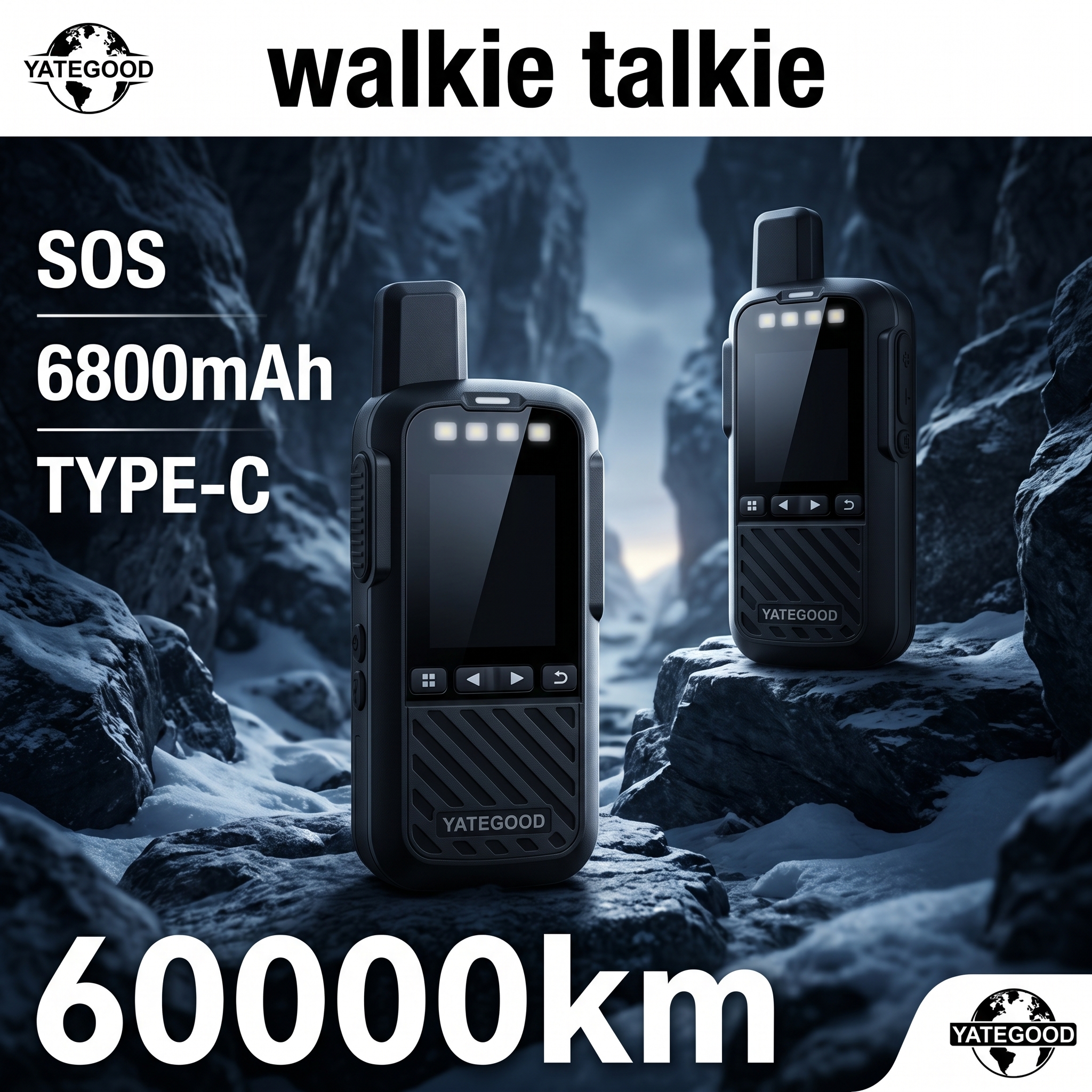
Field and Tunnel: In remote areas and underground environments, walkie-talkies can be the only reliable means of communication.
Medical and Commercial Facilities: In medical facilities, large shopping malls, and large events, walkie-talkies offer direct and rapid communication.
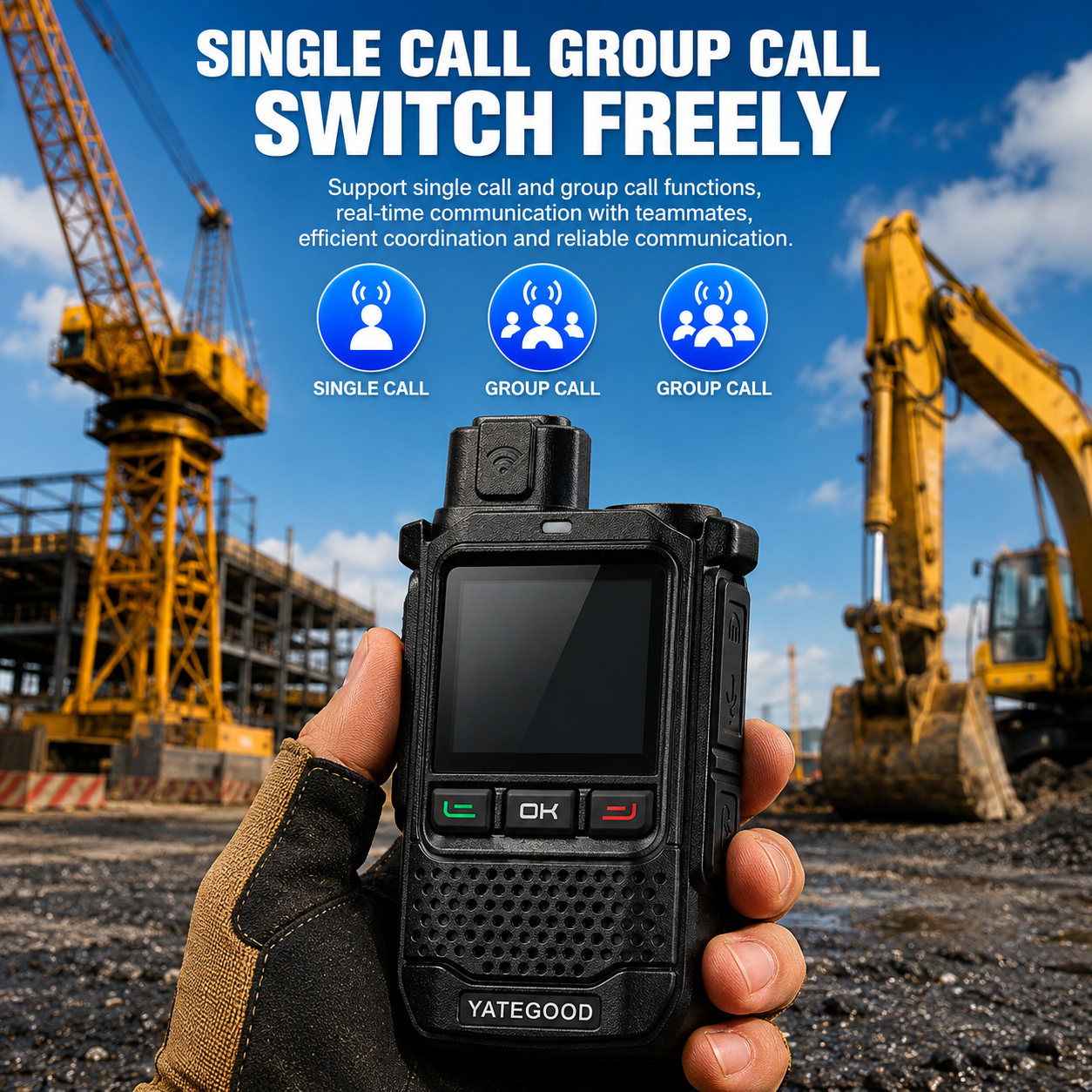
Construction Sites and Industry: Walkie-talkies are reliable in hazardous working environments, improving work efficiency.
.
c
Comment
.png?w=1254&h=1254)