Why haven't walkie-talkies been replaced by mobile phones?
Jul 14,2026 | yategood
Smartphones now boast increasingly diverse functions, essentially functioning as handheld computers with reliable signal strength. Walkie-talkies, on the other hand, are an older product and cannot compare to smartphones in many ways. While smartphones can do everything walkie-talkies can, walkie-talkies cannot.
Despite this, some groups still use walkie-talkies. Why haven't they been replaced by smartphones?
Because of its unique functions, or rather, its outstanding advantages, a walkie-talkie cannot be replaced by a mobile phone.
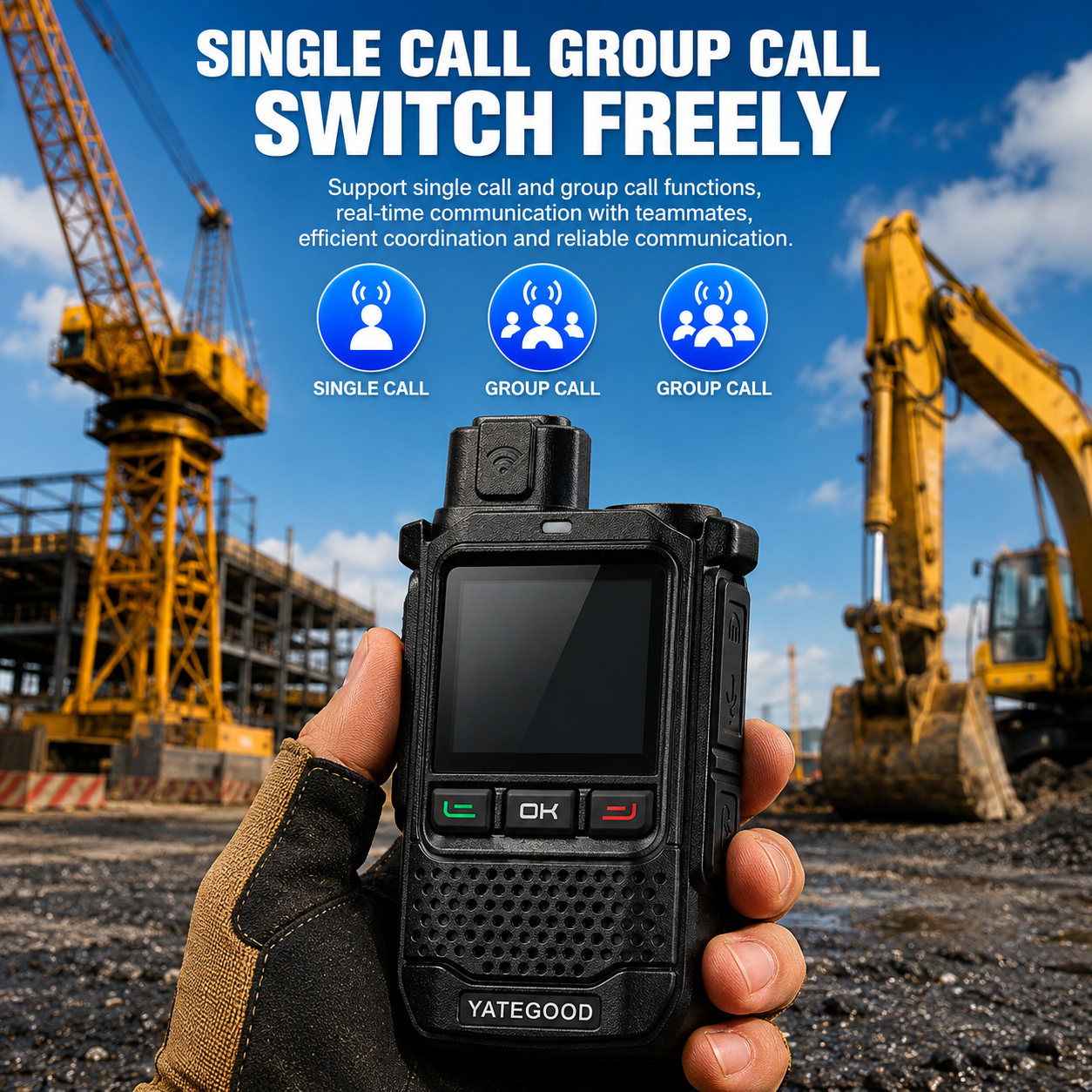
A walkie-talkie is a communication tool with extremely simple functions. It requires neither a network nor incurs call charges; it provides a stable signal and enables one-to-one or one-to-many communication. Therefore, in certain special situations, such as modern warfare, riot control, wilderness exploration, police arrests, traffic police duties, security guard duties, flood relief, fire rescue, and construction projects, one can often see people holding walkie-talkies and communicating.
.png?w=1122&h=1402)
In addition to the factors mentioned above, walkie-talkies have another advantage: excellent security and confidentiality. Because walkie-talkie communication is point-to-point, it is not as easily eavesdropped on or hacked as a mobile phone. For industries requiring confidentiality, the security of walkie-talkies can ensure that information is not leaked.
Walkie-talkies are a type of shortwave communication device. Today, Tuoming Civil Defense will discuss shortwave communication with you.
I. Shortwave is the only long-range communication method that is not constrained by network hubs and active repeater stations.
No matter what modern communication method, its resilience and autonomous communication capabilities cannot compare to shortwave. Existing wired networks and various wireless networks all rely on central hubs for relay transmission. If a hub is paralyzed due to war or natural disasters, local areas or even the entire network will be paralyzed. Shortwave communication, however, typically does not have a central hub. Each station can act as both a master and a slave station. Destroying some stations does not affect the normal communication of the entire network. This is probably one of the important reasons why military communications rely on shortwave.
Ultra-shortwave and microwave radio both rely on line-of-sight propagation. Due to factors such as the curvature of the Earth, ground obstacles, and weather, they can generally only communicate over distances of a few kilometers to tens of kilometers. In mountainous areas, deserts, oceans, and other areas with complex or vast terrain, the coverage area of ultra-shortwave is limited. Even with the help of repeater stations, which can connect to more distant radio stations, there are still many blind spots within the coverage area.

Shortwave communication systems do not require complex hub stations and repeater stations, and compared to paid communication systems such as satellite and handheld phones, shortwave's operating costs are almost zero, eliminating the need for expensive maintenance and call charges.
Of course, shortwave itself has some drawbacks. For example, the available shortwave propagation frequencies frequently change, shortwave communication is susceptible to interference, and the shortwave bandwidth is relatively narrow, making it difficult to achieve high-speed, high-data-volume communication such as dynamic images. However, with the emergence and application of adaptive technology, digital signal processing (DSP), spread spectrum technology, and very large-scale integrated circuit technology in recent years, these problems have been effectively improved. Under this positive development trend, shortwave communication has not only not been eliminated but is gradually gaining popularity, not only being heavily used by the military and specialized industries but also seeing increasing applications and usage among civilians.
Tuoming Civil Defense believes that although shortwave has some shortcomings, it demonstrates unparalleled advantages when other means of communication fail. The more advanced various new communication technologies become, the greater the need for secure and reliable shortwave as a backup communication tool in case of emergencies.
Because of the importance of shortwave, shortwave manufacturers are working hard to develop new technologies and products, optimizing aspects such as frequency selection, noise reduction, anti-interference, intelligence, and digitalization, and continuously promoting the development and progress of shortwave communication.
Comment
.png?w=1254&h=1254)